WhatsApp has become one of the most commonly used communication apps for personal conversations, business messages, photos, videos, documents, and other private information. Because so much personal information can be stored inside a WhatsApp account, protecting the app from unauthorized access is important.
If someone gets access to your unlocked phone, they may potentially be able to open WhatsApp and view conversations, media, and shared documents. This is where a WhatsApp lock app can provide an additional layer of protection.
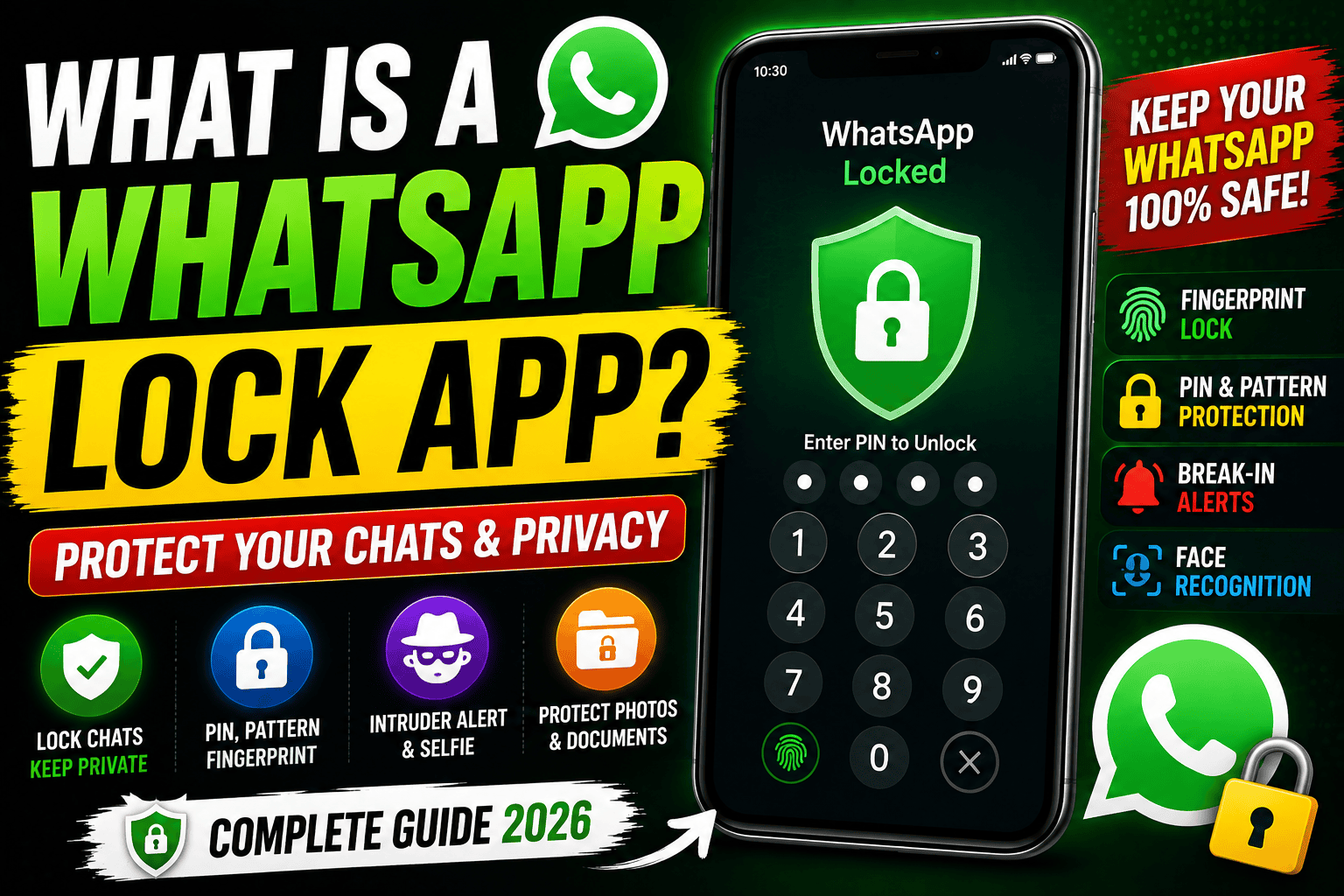
A WhatsApp lock app is designed to prevent other people from opening WhatsApp without passing an additional security check. Depending on the tool, that protection may use a PIN, pattern, fingerprint, face recognition, or other locking methods. The source article also describes third-party lock applications as offering additional customization and privacy controls beyond the built-in options available in WhatsApp.
In this guide, we’ll explain what a WhatsApp lock app is, why people use one, how these applications generally work, the difference between WhatsApp’s own security features and third-party lock tools, and some important things to consider before installing one.
What Is a WhatsApp Lock App?
A WhatsApp lock app is a security application designed to restrict access to WhatsApp.
The basic idea is simple. You may already have a password, PIN, fingerprint, or face lock protecting your entire smartphone. However, an additional app-level lock can provide another barrier before someone can open WhatsApp.
For example, imagine that you give your phone to a friend so they can make a phone call. Your phone is already unlocked, but WhatsApp has an additional lock. The person would still need to pass the WhatsApp-specific security check before accessing your conversations.
According to the source article, third-party WhatsApp lock applications can offer options such as PINs, patterns, fingerprints, face recognition, and in some cases stealth-oriented features.
The exact features depend on the particular application.
Why Would Someone Need a WhatsApp Lock?
The main reason is privacy.
WhatsApp conversations can contain information that you don’t want other people reading. This might include personal conversations, business discussions, photographs, documents, contact information, or other private material.
A phone can also be temporarily shared with family members, friends, colleagues, or children.
Without an additional application-level lock, anyone who can access your unlocked phone may be able to open applications that don’t have their own protection enabled.
A WhatsApp lock adds another barrier between your private conversations and someone who shouldn’t be viewing them.
Protecting Personal Conversations
People use WhatsApp for everyday conversations with friends and family, but it is also used for more sensitive discussions.
A conversation might contain:
- Personal messages
- Family discussions
- Work information
- Customer communication
- Private photographs
- Important documents
- Contact details
The source article specifically identifies protecting sensitive conversations as one of the main reasons someone may want a WhatsApp lock app.
An app-level lock can therefore be useful when you want WhatsApp to have an additional layer of privacy beyond the security of the phone itself.
Protecting Photos, Videos and Documents
WhatsApp isn’t only about text messages.
People regularly send photographs, videos, PDFs, documents, voice messages, and other files through the platform. Some of these files can be personal or confidential.
If someone opens your WhatsApp account, they may potentially see media and files that you would rather keep private.
The source article highlights protection of shared photos, videos, and documents as another reason users may choose a WhatsApp lock solution.
A lock can therefore be useful not only for conversations but also for the information exchanged through those conversations.
WhatsApp on a Shared Phone
Another situation where an app lock can be useful is when a smartphone is regularly shared.
For example, a phone might occasionally be used by:
- Siblings
- Children
- Friends
- Family members
- Colleagues
You may be comfortable allowing someone to use the phone without wanting them to access your private WhatsApp conversations.
The source article specifically mentions multi-user devices and situations where phones are shared with siblings, children, or friends.
An application-level lock can provide an extra boundary between general phone access and private communication.
WhatsApp Lock and Parental Control
The source article also discusses parental control as a possible use of WhatsApp lock applications.
Parents may want to restrict access to WhatsApp on a child’s device or prevent unauthorized use of the application. A lock can make it more difficult to open the application without permission.
However, parents should also consider communication and age-appropriate digital safety rather than relying entirely on an app lock.
Technology can provide restrictions, but responsible guidance remains important.
WhatsApp’s Built-In Lock Features
One important point is that you may not always need a third-party application.
WhatsApp itself provides security features, and the source article mentions built-in options such as fingerprint locking on Android and Face ID on iPhones.
This is an important starting point because built-in security features can be more convenient than installing an additional application.
Before downloading a third-party lock tool, check the security and privacy options available in WhatsApp and on your smartphone.
If the built-in functionality already provides the level of protection you need, adding another application may not be necessary.
Built-In Lock vs Third-Party Lock Apps
The main difference is the amount of customization available.
Built-in WhatsApp locking focuses on providing basic application protection. Third-party lock applications may offer additional controls depending on the particular product.
The source article lists examples such as custom lock timing, disguised or fake covers, break-in alerts, intruder selfies, and app usage reports as features that some third-party solutions may provide.
These features can sound attractive, but users should remember that third-party applications also introduce another piece of software into their device.
That means you should consider both the additional functionality and the privacy implications before installing one.
What Is a Custom Lock Time?
Some third-party lock applications may allow users to customize when an application should require authentication.
For example, a user may want stronger protection during certain situations while reducing interruptions at other times.
This type of customization can be useful for people who want more control over when their applications are locked.
However, the availability of such features varies from one application to another. You should always check the current feature list of the particular app you are considering.
What Are Break-In Alerts?
Some lock applications are designed to notify users when someone repeatedly attempts to access a protected application.
According to the source article, break-in alerts are among the additional features that third-party lock tools may provide.
Such a feature can be useful if you’re concerned that somebody is trying to access your private applications without permission.
Again, the exact behavior depends on the application and the permissions it has been granted.
What Are Intruder Selfies?
Another feature mentioned by the source is an intruder selfie.
The basic idea is that a lock application can potentially capture information about an unsuccessful access attempt. This may help a user determine whether someone tried to open a protected application.
This is an example of a feature that goes beyond a simple PIN or fingerprint lock.
However, because such functionality may involve access to the camera or other sensitive permissions, users should carefully review what permissions an application requests before enabling it.
How Does a WhatsApp Lock App Work?
The technical process can vary depending on the application.
The source article explains that many WhatsApp lock applications operate through AppLock APIs on Android or similar mechanisms on other platforms.
In practical terms, the lock application monitors access to the protected application and requires authentication before allowing it to be opened.
The authentication could be a:
- PIN
- Pattern
- Fingerprint
- Face recognition
- Other supported security method
The exact technology depends on the application, Android version, and device.
Why App Permissions Matter
One of the most important things to check before installing a third-party lock app is its permissions.
A security application may require certain permissions to perform its functions. However, users should understand why those permissions are needed.
For example, if an application asks for access that doesn’t seem related to its advertised purpose, that should make you pause and investigate.
Never assume that an application is safe simply because its name contains words such as “security,” “lock,” or “privacy.”
Look at the developer, reviews, privacy information, permissions, and download source.
Third-Party Apps Need More Trust
There is a simple principle to remember:
The more access an application receives, the more important its trustworthiness becomes.
A third-party lock application is supposed to protect your private information. Therefore, you should be particularly careful when choosing one.
Before installing a lock app, consider:
- Who developed it?
- Where are you downloading it from?
- What permissions does it request?
- Does it have a clear privacy policy?
- Are there credible user reviews?
- Is it regularly updated?
- Does it actually need all requested permissions?
These questions can help you make a more informed decision.
Is a WhatsApp Lock App Necessary for Everyone?
No.
If you are the only person who uses your phone and your device already has a strong screen lock, you may not need an additional third-party application.
Likewise, if WhatsApp’s built-in security options provide enough protection for your situation, installing another app may add unnecessary complexity.
On the other hand, people who regularly share their phones or want additional customization may find app-level locking useful.
It ultimately depends on your personal situation and the level of protection you need.
Benefits of Using a WhatsApp Lock App
A WhatsApp lock app can offer several potential benefits.
Additional privacy: It creates another barrier before someone can access WhatsApp.
Protection for conversations: Private chats can be protected from casual access.
Media protection: Photos, videos, and documents inside WhatsApp receive additional protection from unauthorized access.
Shared-device privacy: It can be useful when other people occasionally use your unlocked phone.
Multiple authentication options: Depending on the application, you may be able to use a PIN, pattern, fingerprint, or facial recognition.
Additional controls: Some third-party tools may offer features beyond basic application locking.
These benefits explain why app-locking tools remain interesting to smartphone users.
Possible Downsides
Despite the benefits, there are also reasons to be cautious.
A third-party lock application is another app running on your smartphone. It may consume some resources and require permissions.
There is also the possibility of compatibility problems after an Android or application update.
Another concern is privacy.
If you’re installing a security tool specifically to protect your private conversations, you should be very careful about giving that tool unnecessary access to your device.
A poorly chosen security application could create more problems than it solves.
WhatsApp Lock Apps and Privacy
Privacy should be at the center of your decision.
A lock app is designed to protect your information, but you still need to trust the application itself.
Before installing one, read its privacy information and understand what information it collects and why.
Don’t provide unnecessary personal information simply because an application requests it.
If the app seems suspicious, has excessive permissions, or comes from an unreliable source, look for an alternative.
Use Official Sources Whenever Possible
Where possible, download applications through reputable and official channels.
The source article provides a Google Play download reference alongside its discussion of WhatsApp lock applications.
Official distribution channels can make it easier to identify the developer, read available information, check reviews, and receive updates.
That doesn’t mean every application available through an official store is automatically perfect, but it is generally better than downloading unknown files from random websites.
What Should You Look for in a Lock App?
If you decide that a third-party WhatsApp lock app is right for you, focus on practical features rather than choosing an application simply because it has the longest feature list.
Look for:
Reliable locking: The basic lock should work consistently.
Biometric support: Fingerprint authentication can make unlocking quick and convenient.
Simple interface: Security shouldn’t make your phone unnecessarily difficult to use.
Reasonable permissions: The application should not demand unrelated access without a clear reason.
Good reputation: Look for trustworthy reviews and developer information.
Regular updates: Updated software is important for compatibility and security.
Clear privacy information: You should understand how your information is handled.
Final Thoughts
A WhatsApp lock app can be a useful privacy tool for people who want an additional layer of protection around their conversations and media.
The basic concept is straightforward: instead of relying only on your phone’s main lock screen, an additional security layer can be placed around WhatsApp itself. Depending on the solution, that protection may use a PIN, pattern, fingerprint, face recognition, or other authentication methods.
Third-party lock applications can also provide additional customization. The source article mentions features such as custom lock timing, break-in alerts, disguised covers, intruder selfies, and usage reports as examples of functionality that may be available.
However, more features do not automatically mean better security.
Before installing a third-party WhatsApp lock app, first check whether WhatsApp’s built-in security options already meet your needs. If you still need additional functionality, choose a reputable application, review its permissions carefully, and understand its privacy practices.
For people who frequently share their phones, manage sensitive conversations, or simply want another privacy barrier, an app-level lock can be a practical solution.
At the end of the day, protecting WhatsApp isn’t only about installing a lock. It’s about creating good digital-security habits: use a strong phone lock, protect your accounts, keep applications updated, enable available security features, and be careful about which applications you allow to access your device.
A good security setup should make your private information harder for unauthorized people to access without making you forget that privacy also depends on the choices you make every day.